

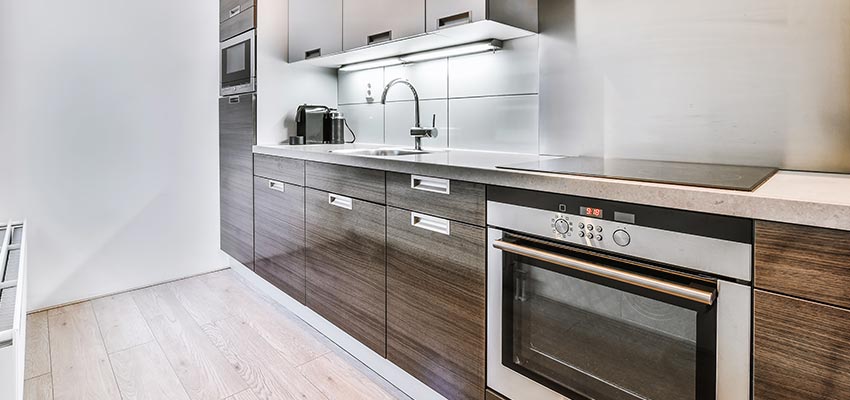
Looking to buy cabinets for your kitchen? There are many things to consider, including material, style, and finish, which can make the process overwhelming. Therefore, here are the answers to some common questions people ask about kitchen cabinets, such as Timberlake or 1951 cabinets.
Common Questions About Kitchen Cabinets
What things do I need to consider when buying kitchen cabinets?
When you’re buying kitchen cabinets, you should choose these things:
- Cabinet type (ready-to-assemble, stock, semi-custom, or custom)
- Cabinet box material (plywood, MDF, particleboard)
- Cabinet door material (solid wood, MDF, thermofoil, laminate, glass, etc.)
- Cabinet construction (framed or frameless)
- Cabinet style (shaker, slab, raised panel, inset, etc.)
- Cabinet finish (glaze, matte, stain, varnish, lacquer, etc.)
- Cabinet color
- Cabinet hardware
- Cabinet features (pull-out drawers, deep drawers, etc.)
Should I choose framed or frameless cabinets?
Framed cabinets are traditional cabinets that have the frame visible between the cabinet doors and drawers. On the other hand, frameless cabinets don’t have a visible frame. That’s why they are also called modern or contemporary cabinets.
Framed cabinets have improved durability due to the frame acting as support. They are also slightly low-cost and easy to install because the construction is traditional. However, in-frame cabinets may have a little lower storage space because the frame takes up some space as well.
On the flipside, frameless cabinets are sleek and modern, and ensure more storage space. But they cost more because you need sturdy box material and the installation is comparatively difficult.
Which cabinet box material is better?
Short answer: Plywood, HDF, and MDF are common box materials you’ll see. Plywood is the strongest of the three.
Detailed answer: For a cabinet box (carcass), you can choose from plywood, MDF, HDF, solid wood, stainless steel, and particleboard.
Plywood: This is considered the best box material for cabinets. Plywood is made with thin layers of wood glued together. It’s also not as expensive as some other options (steel and solid wood), even though it’s extremely durable.
MDF: Medium-density fiberboard (MDF) is made by making wood fibers out of hardwood and then binding them together using resin or wax. It’s strong but as much as plywood, HDF, steel, or solid wood. However, the best thing about MDF is that it’s quite affordable and cheaper than these materials.
HDF: High-density fiberboard (HDF) is a stronger cousin of MDF. It’s more durable and also costs more. HDF with high moisture resistance is excellent for kitchens and bathrooms.
Solid Wood: Hardwood is natural wood from various tree species. The durability and cost may differ with each tree species. But three things are sure: it’s durable, it has a unique appeal, and it costs a lot – more than plywood, MDF, HDF, and particleboard.
Stainless Steel: It offers an industrial or luxury appeal, and is considered extremely durable, though it’s also one of the most expensive cabinet box materials.
Particleboard: It’s wood chips and sawdust bonded together using resin. So, it’s not very durable, but it’s the cheapest of the lot.
What are the different types of cabinet door materials?
There are many materials for cabinet doors. You can choose an option based on your preferences and budget:
Solid Wood: It’s natural wood. It’s strong, but costly, and requires maintenance.
Glass door with frames: The cost and durability of most glass doors with frames depend on the frame material. Stainless steel, aluminum, and wood frames are common.
Stainless steel: Steel doors are highly durable and costly. However, they are moisture-proof and require low maintenance.
Plywood: A durable alternative to hardwood. Less costly than hardwood while still being strong and moisture resistant.
MDF: It’s a medium-tier option that offers good durability with cost-effectiveness. It’s also a common choice for wood veneer, thermofoil, and painted cabinet doors.
Melamine: It’s similar in durability with MDF, but costs less than it, so a great option for budget cabinets.
Laminate: Another budget option that is fairly durable and moisture-resistant. Usually, they are priced similarly to melamine.
Thermofoil: It’s a budget-friendly option that is also fairly durable and moisture resistant, and offers modern aesthetics.
Particleboard: It’s usually the most inexpensive cabinet door option. However, its moisture-resistance and durability are not quite up to the mark.
What is the cheapest way to buy kitchen cabinets?
Buy RTA (read to assemble) or stock cabinets. RTA cabinets are offered by manufacturers, which you need to assemble and install, whereas stock cabinets are pre-assembled, pre-made cabinets in standard sizes and styles. Installing kitchen cabinets yourself can also cut costs.
How long do kitchen cabinets last?
The longevity of kitchen cabinets depends on the material, installation, and maintenance. Here’s the lifespan of common kitchen cabinet materials:
- Solid Hardwood: 30 to 50 years
- Stainless steel: 20 to 50 years
- Plywood: 20 to 30 years
- Laminate (vinyl-coated): 10 to 25 years
- MDF: 10 to 20 years
- Thermofoil: 10 to 15 years
- Particleboard: 5 to 10 years
What are the three types of kitchen cabinets?
The three types of kitchen cabinets are stock, semi-custom, and custom.
Stock cabinets: These are pre-manufactured cabinets available in standard sizes and finishes. They are cost-effective and offer quick installation, but there is very little room for customization. Plus, the quality of most (not all) stock cabinets is inferior.
Semi-custom cabinets: They offer moderate customization after you choose from a line of cabinetry. They cost more than stock but offer better installation and sizing, along with durability.
Custom cabinets: They are made from scratch according to the kitchen’s measurements and your requirements. Custom cabinets are expensive but offer flawless installation and excellent durability.
How to ensure you’re buying durable kitchen cabinets?
Choose a reputable manufacturer or dealer, and pick durable materials like plywood, HDF, and MDF. Moreover, have an expert install the cabinets because improper installation can lead to premature damage, even to high-quality cabinets.
Do I need to take measurements before choosing and ordering cabinets?
Usually, homeowners do need to take measurements but they are for the store or dealer to provide you with a rough estimate. For installation, if the dealer or installer is handling it, they will visit the site and measure the space for cabinets because homeowners can skip some details which can lead to improper installation.
However, if you’re DIYing your kitchen cabinet installation and only buying the cabinets, then you’re responsible for taking measurements and installing the cabinets properly.
What are European-style kitchen cabinets?
European-style cabinets are frameless cabinets. In contrast to traditional, American-style cabinets, frameless cabinets don’t have the frame layer that is visible between the doors and drawers. These cabinets offer a sleek and modern appearance with increased storage capacity. However, they are costlier than traditional, framed cabinets and are also difficult to install.
What cabinet style is most popular?
Shaker cabinets are arguably the most popular. However, some other cabinet styles also have their fanbase, like flat-panel, raised panel, inset, traditional, transitional, and glass-front cabinets. There are more cabinet styles as well, so whether you’re looking for popular or unique cabinet styles, you’ll find something to love.
Conclusion
Choosing kitchen cabinets can be confusing and stressful. So, we hope these FAQs help you in the process and make things a bit simpler. For queries or more information, get in touch with a 1951 cabinetry dealer MD.